Pages

Subscribe:

Ads 468x60px

Powered by Blogger.

Featured Posts

Tuesday, 9 May 2017

An Anniversary You Can't Refuse: 40 Years of 'The Godfather'

It was this week in March of 1972 when “The Godfather” came out in cinemas. Filmmaker Francis Ford Coppola has since become a household name and the masterpiece, a cult classic. We honour four decades of the ultimate mafia film with 40 facts about the production.

Guns, oranges, a horse head—oh my! Who knew that these would be the key ingredients for a classic mafia movie? time has compiled trivia and tidbits about the film in line with its 40th anniversary.

Photo via time

1. The Cat
As Don Corleone calmly explains his idea of “friendship” to the undertaker Bonasera, the first nearly full-body shot of the don reveals an unexpected guest: a gray and white cat sitting in Marlon Brando’s lap. “The cat in Marlon’s hands was not planned for,” director Francis Ford Coppola said later. “I saw the cat running around the studio, and took it and put it in his hands without a word unblocked games at school.” Brando apparently loved children and animals, and it became part of the scene. But it also nearly ruined the shot. When the sound crew listened to Brando’s dialogue, they couldn’t understand a word he was saying and feared they would have to use subtitles. The problem wasn’t Brando but the cat, whose purring wrecked the sound. You can still hear it on the sound track.

Photo via time

2. Coppola Wasn’t the First Choice
By 1971, Francis Ford Coppola had written and directed several cheap films produced by Roger Corman, directed The Rain People (starring Godfather co-stars James Caan and Robert Duvall) and won an Academy Award for his screenplay of the George C. Scott film Patton. But the reason he was chosen as director of The Godfather was because he was young (i.e., the studio assumed, cheap and pliable) and Italian, which certainly wouldn’t hurt when the inevitable protests arrived. But several big names were considered before Coppola unblocked games: Elia Kazan (On the Waterfront), Arthur Penn (Bonnie and Clyde), Peter Yates (Bullitt) and Greek director Costa-Gavras (Z, which won an Oscar for Best Foreign Language Film). Author Mario Puzo wrote that although Costa-Gavras was interested in the film as an “indictment of American capitalism … he declined because it was too American and he felt that he, as a foreigner, couldn’t handle the nuances.”

Photo via time

3. The Horse Head
It could be said of so many movie moments, but describing the horse-head scene as one of the most iconic in American film history is no exaggeration. It was already famous from the book — only in Mario Puzo’s novel, the horse’s head was on the bedpost when Jack Woltz wakes up. Audiences rose up in anger over the death of the horse, and many asked if it were a real animal head.

Yes, it was. The studio had encouraged Francis Ford Coppola to use a fake horse head, but he didn’t like the mock-up. His scouts found a horse ready for slaughter at a dog-food plant in New Jersey. The art director picked one that looked like the horse in the film and said, “When that one is slaughtered, send us the head.” Coppola later remembered, “One day, a crate with dry ice came with this horse’s head in it.”

Photo via time

4. Brando Was Almost a No-Go
Early in his career, Marlon Brando starred in hits such as On the Waterfront and A Streetcar Named Desire. But by 1971, he had a reputation for conflicts with directors, off-screen antics and delays on the set. Even though Don Corleone appears in less than a third of the film, Francis Ford Coppola knew he needed an actor who could give the picture power and mystique, and in Brando he had his man. Studio head Stanley Jaffe thought otherwise and told Brando, “As long as I’m president of the studio, Marlon Brando will not be in this picture.” After more badgering, Jaffe finally agreed to three concessions he thought would be deal breakers: that Brando work for far less than his usual salary, take financial responsibility for any delays he caused and, most important, consent to a screen test, which was unheard of for the actor at that time.

Photo via time

5. What’s with All the Oranges?
Though some have interpreted the presence of oranges in various scenes as a harbinger of death to come (see the oranges that roll across the street as Don Corleone gets shot, the ones in producer Jack Woltz’s dining room, the ones at the meeting of the dons and those in Don Corleone’s garden), the reason for their presence is likely a more practical one. In his book on the making of the film, The Godfather Legacy, Harlen Lebo writes, “For [production designer] Dean Tavoularis, oranges were simply another carefully chosen compliment to otherwise somberly dressed sets. ‘We knew this film wasn’t going to be about bright colors, and oranges make a nice contrast,’ said Tavoularis. ‘I don’t remember anybody saying, Hey, I like oranges as a symbolic message.’"

Monday, 14 March 2016

From Marlon Brando to Gigi Hadid: the return of rebel headgear


Vogue cover girl Gigi Hadid might not know it, but with her peaked cap she could be 2016’s answer to Marlon Brando


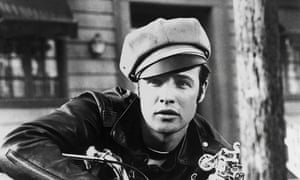
Marlon Brando wearing a peaked cap in 1953’s The Wild One. Photograph: Columbia/Sportsphoto Ltd/Allstar

Here’s a thing: Gigi Hadid is a new addition to the cover of Vogue but the look she’s wearing – biker jacket, Breton top and, crucially, peaked cap – is as old as youth culture itself. She probably doesn’t know it, bless her, but the stylist has dressed her up to look like a 50s teen – part James Dean (the Breton) but mostly Marlon Brando in 1953’s The Wild One. As the leader of a “gang of hot riding hot-heads”, Brando’s character, Johnny Strabler, wears biker leathers and a peaked cap throughout. When asked what he’s rebelling against, he famously replies with a curled lip and scowl: “Whadda you got?” And so, the peaked cap and biker jacket has come to stand for classic youthful rebellion – edgy, on the prowl – for more than 60 years.


Gigi Hadid as a modern Brando on the cover of January’s Vogue. Photograph: Vogue

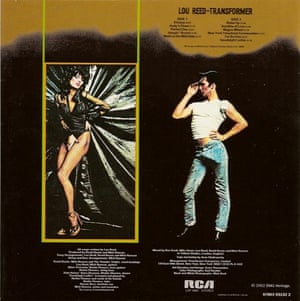
John Lennon wore a fisherman’s cap throughout the 60s, but it was the 70s that gave the shape a seedy, slightly fetish feel. See the back of Transformer, the 1972 Lou Reed album – in the news this week following the death of Holly Woodlawn, the inspiration behind the classic track, Walk on the Wild Side. Take your eyes off the strategically placed banana in Ernie Thormahlen’s jeans and you’ll notice his strongman stance – possibly influenced by Tom of Finland’s homoerotic artwork of bikers and fetish gear, popular at the time – is topped off by a peaked cap. Part military, part Brando – with the white T-shirt and blue jeans of a 50s rebel – it’s now iconic. (Side note: Peter Marino, the architect responsible for stores for Christian Dior and Fendi, is like a Tom of Finland drawing come to life: always dressed in full leathers, sunglasses and peaked cap).

The peaked cap on the back cover of Lou Reed’s 1972 album Transformer.

And then there’s Charlotte Rampling in 1974’s The Night Porter – wearing the peaked soldier’s cap that belonged to her SS lover, played by Dirk Bogarde, accessorised with wide trousers, elbow length gloves braces and nothing underneath. Fashion, never adverse to a controversial image or a bad girl, has kept this one close to hand. Madonna referenced Rampling’s outfit, complete with cap, in the hotel room romp video for 1990’s Justify My Love, directed by fashion photographer Jean-Baptiste Mondino, and Beyoncé’s in Love On Top is a more PG take.

Charlotte Rampling in 1974’s The Night Porter. Photograph: Everett Collection/REX

Marc Jacobs basically recreated The Night Porter for his autumn/winter 2011 Louis Vuitton show, aka the one where Kate Moss smoked on the catwalk. Based on the idea of fetish, it came with corsets, rubber and, bingo, the peaked cap. Worn by more than half the models, some with eye masks slung around the brim – it was the full stop to Jacobs’ point.


 Beyoncé wearing a peaked cap in the video for Love On Top.

So, yeah, 20-year-old Hadid is probably innocent to all these references, happily grinning on the cover of January Vogue. But they are there for all who want to see them. Brando might be long gone, but his image – the original rebel – is still hanging around like the best kind of bad influence. The one thing Hadid got wrong? Smiling. That, to put it in language she’d understand, is a major fail when it comes to being Brando. What with so many things to rebel against, scowling is the only way to go.


A peaked cap on the Louis Vuitton catwalk, 2011. Photograph: Kerlakian/REX Shutterstock

Marlon Brando Nailed Hollywood's Diversity Issue Over 40 Years Ago

Getty Images 
 
In 1973, the American Academy of Motion Picture Arts and Sciences nominated Marlon Brando for Best Actor after a now iconic performance in "The Godfather" as Don Vito Corleone. He was pretty much a shoo-in.

When presenters Liv Ullmann and Roger Moore announced his name, however, Brando famously wasn't there to accept it. In his place was the Native American activist Sacheen Littlefeather, who took the microphone and briefly and eloquently explained that Brando had decided not to attend in protest of what he saw as the inaccurate and unfair portrayals of nonwhite characters in Hollywood.
For her comments, she was booed.
Sacheen Littlefeather at the 1973 Academy Awards.
After the Oscars ceremony, Littlefeather shared a written statement from Brando with the press. In it, the actor argued "history will judge us" for misrepresenting Native Americans onscreen, in part because doing so damages the self-image of children "in ways we can never know."
That is the well-remembered part of this story. What's less well remembered is Brando's appearance several months later on "The Dick Cavett Show," a popular variety program at the time. Both Littlefeather and Brando had been attacked by press, her for not being "Indian" enough (she's half-Native-American), and Brando for pulling such a stunt in the first place. After a few minutes of awkward banter, Cavett hit his guest with the question likely on everyone's minds: Did he regret boycotting the Oscars?
Marlon Brando on "The Dick Cavett Show."
He didn't, and instead of apologizing, Brando used the stage to criticize the insulting roles people of color were typically offered in Hollywood. That is, roles that played upon stereotypical racial cliches (emphasis ours).
I don’t think that people generally realize what the motion picture industry has done to the American Indian, as a matter of fact, all ethnic groups. All minorities. All non-whites. People just simply don’t realize. They take it for granted that that’s the way people are going to be presented, and that these cliches are just going to be perpetuated. So when someone makes a protest of some kind and says, "No, please don’t present the Chinese this way." ... On this network, you can see silly renditions of human behavior. The leering Filipino houseboy, the wily Japanese or the kook or the gook. The idiot black man and the stupid Indian. It just goes on and on and on, and people don’t realize how deeply these people are injured by seeing themselves represented -- not so much the adults, who are already inured to that kind of pain and pressure -- but the children. Indian children, seeing Indians represented as savage, as ugly, as nasty, as vicious, treacherous, drunken -- they grow up only with a negative image of themselves, and it lasts a lifetime.
Forty-three years later, the racist tropes are different, often more subtle, but minority actors still compete for parts that play into stereotypes all the same: the sassy token minority, the nerdy Asian kid, the black guy who dies first.

Just last weekend, a critic for The New York Times proposed a simple diversity test for Hollywood film called the DuVernay test after "Selma" director Ava DuVernay. A movie passes if its minority actors portray characters with "fully realized lives rather than serve as scenery in white stories." Like the Bechdel test before it -- in which movies pass if they show two women talking together about something other than a man -- the mere existence of a DuVernay test illustrates a troubling deep-rooted homogeneity in Hollywood film. We might not see so many "idiot black men" pulling slapstick gags anymore, but it is remarkable when a black actor is featured as a fully developed main character in a big-budget production. (See also: John Boyega's Finn, labeled "the Jackie Robinson" of the "Star Wars" franchise.)

Perhaps little has changed inside Hollywood, but the industry is at least finally taking small steps to confront the problem Brando recognized four decades ago. The Academy announced in January that it would make alterations to its membership to give relevant voices more influence over Oscar candidate nominations. More people now understand that a lack of representation isn't screen-deep -- it's also a product of those who make up the ranks of writers, directors, CEOs and, yes, Academy members.

In his interview with Cavett, Brando also talked about the backlash he'd received for refusing his Academy Award. The audience, he said, didn't appreciate the "reality" Brando injected into their "fantasy" moment. But the actor still felt he had a responsibility to speak up.

"It's an issue that nobody in the motion picture industry has ever addressed, unless forced to," Brando said. Maybe there's already enough momentum to normalize equal representation in Hollywood by the time another four decades pass by. But probably not.

Tuesday, 1 December 2015

10 Ways You Can Use Your Smartphone to Advance Science

IMAGE CREDIT: 
GETTY IMAGES
LIKE US ON FACEBOOK
Your iPhone is not living up to its full potential. Sure, everyone loves posting pictures of their cats to Instagram, and the new RadioLab app is awesome. But we're living in the future! Why not use those tiny computers we're all carrying around for something bigger, like helping advance knowledge in a way that would have been impossible just a few years ago?
Scientists have started to use the abilities and prevalence of smartphones to their advantage, creating apps specifically for their studies and crowdsourcing observation and data collection. When almost everyone has an Internet connection, a camera, and a GPS unit right in their phone, almost anyone can gather, organize, and submit data to help move a study along. Here are 10 projects and apps that will turn you into a citizen scientist.

1. TRACK BIRD POPULATIONS

EBird, started by the Cornell Lab of Ornithology and National Audubon Society, is the world’s largest (97,987,797 observations as of the morning of July 10, 2012) online database of bird observations. Data gathered by smartphone-toting bird watchers around the world and shared via the BirdLog app is used by biologists, ornithologists, educators, land managers, conservationists and policy makers to track avian distribution, richness and biodiversity trends. They hope that “in time these data will become the foundation for a better understanding of bird distribution across the western hemisphere and beyond.” BirdLog is available for $9.99 iOS and Android devices

2. MAP METEOROIDS

NASA’s Meteor Counter app lets iOS users gather and share data about cosmic debris they spot in the sky. Using the app’s “piano key” interface, citizen scientists can quickly record the time, magnitude, latitude and longitude, and estimated brightness of shooting stars, and also annotate their observations with voice notes. When they’re done, they can upload everything to NASA so researchers can analyze the data. Don’t know where to look for meteors? The app also has a news feed and event calendar updated by professional astronomers to help you find upcoming meteor showers. Meteor Counter is available for free for iOS devices.

3. LISTEN IN ON BATS

The Indicator Bats Program (iBats), a joint project of the Zoological Society of London’s Institute of Zoology and The Bat Conservation Trust, got its start with a couple of researchers working in Transylvania (of course) in 2006. The idea of the project is to identify and monitor bat populations around the world by the ultrasonic echo-location calls they use to navigate and find prey. No easy task for the naked ear, but the iBats app can automatically extract key information from the calls, and identify the species from them. From there, the data gets sent to iBats so researchers can track any changes in abundance or distribution of different species. The app itself is free, but users also need an ultrasonic microphone to plug into their phone so the app can “hear” the call. These microphones can cost hundreds of dollars, and the folks behind the project encourage bat lovers to get together and chip in for one to share. iBats is available for free for iOS and Android devices

4. COUNT ROADKILL

The Mammals on Roads project, run by the Peoples Trust for Endangered Species (PTES), uses surveys of dead mammal sightings along the UK’s roads to get an idea of population and distribution trends. Their Mammals on Roads app logs the travel routes of citizen scientists and lets them easily record which animals they’ve seen and where. Users can see the collected data themselves in the form of maps of their own trips and distribution maps from reports sent in from all over the country. The survey, taken annually since 2001, helped spot a major drop in hedgehog numbers over the course of a few years and led to the PTES launching “Hogwatch” and other hedgehog-focused tracking and conservation projects. Mammals on Roads is available for free for iOS devices, and an Android version will be available soon.

5. INVENTORY YOUR LOCAL WILDLIFE

The goal of Project NOAH (Networked Organisms and Habitats) is pretty ambitious: “build the go-to platform for documenting all the world's organisms.” Their app has two modes. “Spottings” lets you take photos of plants and animals you see, categorize and describe them and then submit the data for viewing on NOAH’s website and use by researchers for population and distribution studies.
Don’t know what you’re looking at? Check a box when you submit your photo and other users and scientists can help you identify the species. You can also use the location-based field guides to see other users’ Spottings near your location and learn more about your local wildlife. “Field Missions” let you help out with crowdsourced data collection for specific studies that labs have submitted to NOAH. You might be asked to photograph invasive beetles near your home, or log GPS coordinates when migrating flocks of birds pass over you, and if discovering wildlife and helping scientists isn’t enough motivation, completing missions also earns you cool badges in the app. Project NOAH is available for free for  iOS and Android devices

6. IDENTIFY AND TRACK TREES

Leafsnap, developed as a joint project by Columbia University, the University of Maryland, and the Smithsonian Institution, is an electronic field guide for trees that uses visual recognition software to identify tree species from photographs of their leaves. User-generated images, species identifications, and geo-tagged stamps of species' locations are automatically shared with the partner institutions and other scientists who can use the data to map and monitor changes in floral density and diversity. Currently, only tree species found in New York City and Washington, D.C., are supported by the recognition software, but the team is “teaching” it other species and the list will continue to grow. Leafsnap is available for free for iOS devices and an Android version will be available soon.

7. KEEP TABS ON TEMPERATURES

Communicating Climate Change (C3) is a program run by 12 science centers around the country that introduces citizen scientists to the methods used to study climate change. The Maryland Science Center’s C3 project invites people to help study Baltimore’s Urban Heat Island (a UHI is the phenomenon of a metropolitan area being significantly warmer than its surrounding rural areas). Citizen scientists in Baltimore use the Temperature Blast app to collect live and archival Weatherbug data from select points around the city and log it for scientists at the Baltimore Ecosystem Study, who will then use it to create models of temperature patterns so they can mitigate the heat island effect in future urban planning. Temperature Blast is available for free for iOS and Android devices. If you’re not in the Baltimore area, there are other app-based C3 projects going on in other cities.

8. MONITOR YOUR LOCAL WATER

Citizen scientists using the Creek Watch app, developed by IBM’s Smarter Planet Project, collect four pieces of data - estimated amount of water, rate of flow, amount of trash and a picture - about waterways they pass and send it to IBM. The technology giant’s researchers aggregate the data and share it with water control boards across the U.S. to help them track pollution and better manage their water resources. Creek Watch is available for free for iOS devices (no word from IBM on an Android version yet).

9. FIND GOOD HOMES FOR REDWOODS

Redwood Watch, a partnership between the Save the Redwoods League, iNaturalist.org, Google Earth Outreach, and the California Academy of Sciences, is recruiting citizen scientists to track the location of redwood trees and help find a home for them in the future. Just take a picture of a redwood wherever you see one - in a national park, a botanical garden or even your own yard - with the Redwood Watch app. The app sends the photo and your location to researchers who can use the data to assess which environments are healthiest for the trees, helping them understand where redwoods thrive in a changing climate so they can better focus their conservation efforts. Redwood watch is available for free for iOS devices.

10. REPORT INVADERS

Invasive plants and animals can crowd out natives, compete with them for food sources and alter the fire ecology of an ecosystem, disrupting its natural balance. Researchers and programmers from UCLA, the Santa Monica Mountains National Recreation Area and the University of Georgia have teamed up to create the What’s Invasive citizen science program and smartphone app. Volunteers can use the app to look up lists of the top invasive species in their area, created by National Park Service rangers and biologists. If they spot a plant or animal from the list, they submit a geo-tagged observation, with optional picture and text notes, so that scientists can locate, identify, study try to remove the species. The What’s Invasive app is available for free for iOS and Android devices.
* * *
This is just a drop in the bucket of cool projects that let the average Joe take part in important science. For more projects you can help out with, some app-based, some not, check out the resources at Cornell’s Citizen Science Central, SciStarter and Scientific American. Are you involved in a citizen science project? Tell us all about it.

The Quest to Discover the World's Books Bound in Human Skin

IMAGE CREDIT: 
SCOTT TROYAN
LIKE US ON FACEBOOK
While it may seem like the stuff of horror movies, an assortment of well-regarded libraries and museums in Europe and the United States own books bound in a very controversial material: human skin.
According to experts, the practice of binding books with human leather ended around the late 19th century, and there are no known 20th-century examples. Today, the idea seems disrespectful if not repugnant, and there are often strong objections to the public display of such books, even as historical specimens. That's why libraries and museums increasingly want to know whether the books in their collections purportedly bound in human skin are the real thing.
On October 5, staff at the Mütter Museum of the College of Physicians of Philadelphia—a renowned collection of medical specimens, artifacts and equipment—announced the results of scientific testing on five of their books whose inscriptions indicated they had been bound in human leather. The testing proved the bindings really did come from people, making the Mütter home to the largest known collection of books bound in human skin in the United States.
Curator Anna Dhody’s announcement came at the beginning of a panel discussion on the subject of anthropodermic bibliopegy, as the practice is known, which was part of a two-day conference on mourning and mortality called Death Salon, co-sponsored by the Mütter. The other panelists were Daniel Kirby, an analytical chemist at Harvard’s Peabody Museum; Richard Hark, chemistry chair at Juniata College; and Megan Rosenbloom, a medical librarian at the University of Southern California and director of Death Salon. Together with Dhody, they’ve recently formed a multidisciplinary team seeking to convince libraries and museums across the country to use the best available science to test the books reputed to be bound in human skin in their collections. They hope to use this data to create an authoritative list of such books, since none exists. 
Left to right: Daniel Kirby, Richard Hark, Megan Rosenbloom, and Anna Dhody. Photo by Scott Troyan.
The earliest examples of books bound in human skin date from the 17th century and were produced in Europe and the United States. According to medical historian Lindsey Fitzharris, the books were generally created for three reasons: punishment, memorialization, and collecting. 
Many of the earliest examples relate to punishment. England’s Murder Act of 1751 stipulated that those convicted of murder would not only be executed but, as an additional deterrent, could not be buried. Until its repeal in 1832, the law required that murderers either be publicly dissected or “hanged in chains.” In some cases, making items out of criminals’ skins provided yet another way to ensure the body stayed aboveground.
A famous example of such punishment was the body of William Burke, who, with his accomplice William Hare, killed 16 people in a 10-month period in 1828 in Edinburgh, Scotland, and then sold the bodies to medical schools. After being caught, executed, and dissected, some of Burke's skin was used to make a pocketbook as a final—and lasting—humiliation. The Burke pocketbook is now on display at Surgeon’s Hall Museum in Edinburgh.
Others gave their skin willingly for the purposes of memorialization. One example of this is on display at the Boston Athenaeum Library. The book, published in 1837, has the highly informative title of Narrative of the life of James Allen : alias George Walton, alias Jonas Pierce, alias James H. York, alias Burley Grove, the highwayman : being his death-bed confession, to the warden of the Massachusetts State PrisonAllen had requested that his skin be used after his death as the cover for two copies of a book chronicling his crimes. One copy would go to John Fenno Jr., the only man known to have stood up to him, and another to his doctor.
The third reason for binding books in human leather was a desire by doctors to create rare items for their personal book collections. The Mütter Museum’s recently tested books fall under this category. They were bound by Philadelphia doctor John Stockton Hough in the late 19th century, using the skin from the thighs of a woman referred to by him only as “Mary L___.”
Earlier this month, Philadelphia College of Physicians librarian Beth Lander uncovered Mary L’s identity, using research in the city’s public records and medical information about her contained in one of the books. Lander discovered that Mary L was Mary Lynch, a poor Irish immigrant who died in 1869 of trichinosis, a parasitic infection she contracted through pork consumption while in the hospital for tuberculosis. Hough was a resident physician and removed a graft of her skin for tanning shortly after her death, holding on to it for approximately 20 years before using it to bind the books.
Philadelphia College of Physicians librarian Beth Lander. Photo by Scott Troyan.
Some of the Mütter Museum's books bound in Mary L's skin. Photo by Scott Troyan.
The Mütter staff didn’t seem particularly disturbed to discover their collection includes true anthropodermic books, but for some institutions, such books are distraction so unwelcome that tests showing the books are bound in ordinary, non-human leather are a relief.
This was the case at Juniata College in Pennsylvania, where a copy of Biblioteca Politica, a 17th-century book on the divine right of kings, had become an object of endless morbid fascination among the student body—particularly around Halloween. That ended last fall when Kirby’s team at Harvard conducted PMF (peptide mass fingerprinting) testing on the title. The tests showed that the book was in fact bound in sheepskin, not human skin. Hark, the chemistry chair at Juniata, said, “this made the librarians very happy, [but some] students were rather disappointed.”
PMF was also the technique used on the Mütter titles. According to Kirby, PMF provides a highly reliable, cost-effective (less than $100), and relatively non-invasive way to test a book’s binding. Using microscopic samples from the book’s cover, PMF identifies the proteins present, and can accurately pinpoint the species of mammal a skin sample is from—including humans.
In the past, books bound in human skin had often been tested using hair follicle analysis—a visual examination method that relies on comparing the shape and distribution of human hair follicles with those of other species. In a follow-up email to mental_floss, Kirby explained that this method is “very subjective” and dependent on how well the material has been preserved. “There can also be a lot of variability in the appearance of the follicle pattern depending on processing, dyeing, stretching, etc,” he said. Follicle analysis has also led to false positives. And Kirby says DNA analysis usually isn’t possible, since the tanning process destroys DNA.
Aided by the promise of PMF, Rosenbloom and Hark have been leading outreach efforts to sometimes-reticent libraries to try and convince them to test their books. Their team explains the testing process to the institutions, and notes that libraries are under no obligation to make the results public. In addition to the Mütter and Juniata, Harvard has also recently disclosed that PMF testing found that just one of their three reputed anthropodermic books was in fact bound with human skin.
Most institutions the team has worked with are keeping quiet, however. During her presentation at Death Salon, Rosenbloom did share the aggregate results so far: Out of the 22 books the group has tested, 12 have been found to be made out of human skin. According to one of Rosenbloom’s slides, the remainder were found to have been bound with “an assortment of sheep, cow, and faux (!) leather.” The team has also identified an additional 16 books that they have not yet tested—and is working to locate more.
Decisions about whether and how to display books bound in human skin will no doubt remain tricky for libraries and museums to navigate. However, PMF testing will at least provide an opportunity to make informed decisions about whether they’re holding the genuine article. As Kirby noted at Death Salon, with these items, “you really can’t tell a book by its cover.”

Marlon Brando, Jr. American actor

Marlon Brando, Jr.,  (born April 3, 1924, Omaha, Nebraska, U.S.—died July 1, 2004, Los Angeles, California), American motion picture and stage actor known for his visceral, brooding characterizations. Brando was the most celebrated of the method actors, and his slurred, mumbling delivery marked his rejection of classical dramatic training. His true and passionate performances proved him one of the greatest actors of his generation.
Brando, the son of a salesman and an actress, grew up in Nebraska, California, and Illinois. After he was expelled from the Shattuck Military Academy in Faribault, Minnesota, for insubordination, he moved in 1943 to New York City, where he studied acting under Stella Adler at the Dramatic Workshop. He made his stage debut in 1944 as Jesus Christ in the Workshop production of Gerhart Hauptmann’s Hannele, and in that same year he first appeared on Broadway in I Remember Mama. After that play’s successful two-year run, Brando appeared in Maxwell Anderson’s Truckline Cafe, George Bernard Shaw’s Candida, and Ben Hecht’s A Flag Is Born (all 1946) and was voted “Broadway’s most promising actor” by New York critics. In 1947 he attained stage stardom with his astonishingly brutal, emotionally charged performance as Stanley Kowalski in the Elia Kazan-directed production of Tennessee Williams’s A Streetcar Named Desire (1947).
“Streetcar Named Desire, A”: still with Brando and Leigh from “A Streetcar Named Desire” [Credit: © 1951 Warner Brothers, Inc.; photograph from a private collection]

Brando made his motion picture debut in The Men (1950), a powerfully realistic study of disabled World War II veterans. In preparation for his role, he spent a month in a hospital paraplegic ward. He received his first Oscar nomination for his performance in A Streetcar Named Desire(1951), Kazan’s highly praised screen adaptation of the play, and went on to receive nominations for his performances in Viva Zapata! (1952) andJulius Caesar (1953). Also from this period is The Wild One (1953), a low-budget drama in which he played the leader of an outlaw motorcycle gang. The film became one of Brando’s most famous and served to enhance his iconoclastic image. It also contains one of Brando’s most oft-quoted lines; when asked what it is he is rebelling against, his character responds, “Whaddya got?”
Brando’s sensitive portrayal of a union muscleman who testifies against his gangster boss in Kazan’s On the Waterfront (1954) won for him the best-actor Oscar and firmly established him as one of Hollywood’s most-admired actors. In 1954 he also portrayed Napoleon Bonaparte in Desiree, and in 1955 he sang and danced in the musical comedy Guys and Dolls. He had continued success with such films as The Teahouse of the August Moon (1956), Sayonara (1957; Oscar nomination), and The Young Lions (1958). In the 1960s, however, his career went into a long period of decline. He starred in the only film he ever directed, the western One-Eyed Jacks (1961); now a cult favourite, it was notorious at the time for Brando’s excessive expenditure of time and money. A lavish remake of Mutiny on the Bounty(1962) was another expensive flop, and Brando’s recalcitrant behaviour during its filming added to his growing reputation as a troublesome and demanding actor. Most of his remaining films of the ’60s, including Charlie Chaplin’s final film, A Countess from Hong Kong (1967), are forgettable.
Francis Ford Coppola’s The Godfather (1972) rejuvenated Brando’s career. As organized-crime boss Don Vito Corleone, Brando created one of the most memorable—and most imitated—film characters of all time. His performance earned him another best-actor Oscar, but he refused the award in protest against the stereotypical portrayals of Native Americans throughout motion picture history. Brando was further vindicated as an actor by his leading role in Bernardo Bertolucci’s sexually explicit L’ultimo tango a Parigi (1972; Last Tango in Paris). He appeared in only five more films during the remainder of the decade—including noted supporting roles in Superman (1978) and Apocalypse Now (1979)—whereupon he retreated to his private Polynesian atoll.
Brando reemerged nine years later to play a crusading antiapartheid attorney in A Dry White Season(1989) and received his eighth Oscar nomination—his first for best supporting actor—for the role. He appeared in six films during the 1990s, highlighted by a send-up of his Godfather character in The Freshman (1990) and by his sensitive portrayal of an aging psychiatrist in Don Juan DeMarco (1995). He also received good notices for his role as a corrupt prison warden in the comedy Free Money (1998), though the film was not widely distributed. In 2001 he appeared in the heist thriller The Score (2001). Brando’s extensive collection of personal audio diaries—recorded over many years—were the basis of the documentary Listen to Me Marlon (2015).
Brando was something of a paradox: he is regarded as the most influential actor of his generation, yet his open disdain for the acting profession—as detailed in his autobiography, Songs My Mother Taught Me (1994)—often manifested itself in the form of questionable choices and uninspired performances. Nevertheless, he remains a riveting screen presence with a vast emotional range and an endless array of compulsively watchable idiosyncrasies.

We don’t go to the movies anymore to be convinced. We go to admire acting as a kind of special effect.

Brando touched everything. Just in that scene, he touches the cat, his hair, his chin, his cheeks, the chair. He eats chicken with his fingers in Streetcar, picks up Eva Marie Saint’s glove in Waterfront, plays with puppies in Zapata and lamp shades in Last Tango in Paris. Throughout his career, he reached for women with the unthinking entitlement of a primate plucking fruit. “He actually really touched whatever he touched as if it were part of him,” wrote David Foster Wallace in a wonderful passage in Infinite Jest, one of the most perceptive things ever written about the actor. “The world he only seemed to manhandle was for him sentient, feeling.” Both a means of centering himself in the moment and a case of rampant scene-stealing, Brando’s fondlings were also a means of rendering communion with the universe, his playful Epicureanism often delivering a small shiver of mortality. Those puppies in Zapata are the last thing he touches before he is mowed down by federal agents. Don Corleone’s last act before the attempt on his life is to buy fruit from a vendor’s stall. (He “points so as not to disturb the vendor’s display,” notes Mizruchi, with pleasing delicacy.) It’s telling that during the 2008 presidential campaign, John McCain named Zapataas his preferred Brando performance while Obama listed The Godfather among his favorite movies. The rebel and the patriarch: the picks signaled the extent to which that contest was fought out between conflicting notions of paternal authority—McCain’s maverick instincts honed in the shadow of his father, Obama’s more patient paternalism a simulacra constructed in the absence of his.
Brando’s career, too, spooled out between those two poles—an early burst of brilliance playing a series of majestically insolent rebels for Kazan, followed by a shadow-draped comeback for Coppola, as Corleone, the most famous patriarch in the history of movies. There is a great irony here, one that goes to the very heart of Brando and the secrets of screen performance. What happened in between—and after—those high points? Some critics have sensed an abyss of self-loathing, into which Brando fell, a figure of Wellesian tragicomedy fattened on burgers and fucking and unending disenchantment with the “lies” of the movie business. Not so fast, says Mizruchi. “The idea that Brando retreated immediately to Tahiti [after shooting The Godfather], where he drowned in the past and ate gluttonously, is unsupported by the facts,” she insists, with rather too much, perhaps, riding on that immediately. This is Brando viewed through an overly forgiving squint. Disdaining what she sees as previous critics’ “excessive emphasis on his romantic affairs,” Mizruchi relegates Brando’s experiments in free-form paternity to a series of parentheses and footnotes. Instead she gives us Brando with his nose buried in Camus and Baldwin—Brando the intellectual, thinker, and bibliophile whose book collection “outstripped those of most academics”; a “visionary” whose multicultural perspectives heralded our own.