Pages

Subscribe:

Ads 468x60px

Powered by Blogger.

Monday, 14 March 2016

From Marlon Brando to Gigi Hadid: the return of rebel headgear


Vogue cover girl Gigi Hadid might not know it, but with her peaked cap she could be 2016’s answer to Marlon Brando
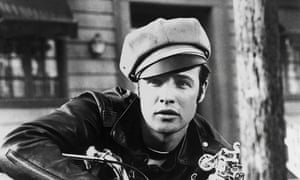

Marlon Brando wearing a peaked cap in 1953’s The Wild One. Photograph: Columbia/Sportsphoto Ltd/Allstar

Here’s a thing: Gigi Hadid is a new addition to the cover of Vogue but the look she’s wearing – biker jacket, Breton top and, crucially, peaked cap – is as old as youth culture itself. She probably doesn’t know it, bless her, but the stylist has dressed her up to look like a 50s teen – part James Dean (the Breton) but mostly Marlon Brando in 1953’s The Wild One. As the leader of a “gang of hot riding hot-heads”, Brando’s character, Johnny Strabler, wears biker leathers and a peaked cap throughout. When asked what he’s rebelling against, he famously replies with a curled lip and scowl: “Whadda you got?” And so, the peaked cap and biker jacket has come to stand for classic youthful rebellion – edgy, on the prowl – for more than 60 years.


Gigi Hadid as a modern Brando on the cover of January’s Vogue. Photograph: Vogue

John Lennon wore a fisherman’s cap throughout the 60s, but it was the 70s that gave the shape a seedy, slightly fetish feel. See the back of Transformer, the 1972 Lou Reed album – in the news this week following the death of Holly Woodlawn, the inspiration behind the classic track, Walk on the Wild Side. Take your eyes off the strategically placed banana in Ernie Thormahlen’s jeans and you’ll notice his strongman stance – possibly influenced by Tom of Finland’s homoerotic artwork of bikers and fetish gear, popular at the time – is topped off by a peaked cap. Part military, part Brando – with the white T-shirt and blue jeans of a 50s rebel – it’s now iconic. (Side note: Peter Marino, the architect responsible for stores for Christian Dior and Fendi, is like a Tom of Finland drawing come to life: always dressed in full leathers, sunglasses and peaked cap).
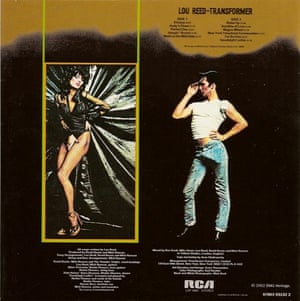
The peaked cap on the back cover of Lou Reed’s 1972 album Transformer.

And then there’s Charlotte Rampling in 1974’s The Night Porter – wearing the peaked soldier’s cap that belonged to her SS lover, played by Dirk Bogarde, accessorised with wide trousers, elbow length gloves braces and nothing underneath. Fashion, never adverse to a controversial image or a bad girl, has kept this one close to hand. Madonna referenced Rampling’s outfit, complete with cap, in the hotel room romp video for 1990’s Justify My Love, directed by fashion photographer Jean-Baptiste Mondino, and Beyoncé’s in Love On Top is a more PG take.

Charlotte Rampling in 1974’s The Night Porter. Photograph: Everett Collection/REX

Marc Jacobs basically recreated The Night Porter for his autumn/winter 2011 Louis Vuitton show, aka the one where Kate Moss smoked on the catwalk. Based on the idea of fetish, it came with corsets, rubber and, bingo, the peaked cap. Worn by more than half the models, some with eye masks slung around the brim – it was the full stop to Jacobs’ point.


 Beyoncé wearing a peaked cap in the video for Love On Top.

So, yeah, 20-year-old Hadid is probably innocent to all these references, happily grinning on the cover of January Vogue. But they are there for all who want to see them. Brando might be long gone, but his image – the original rebel – is still hanging around like the best kind of bad influence. The one thing Hadid got wrong? Smiling. That, to put it in language she’d understand, is a major fail when it comes to being Brando. What with so many things to rebel against, scowling is the only way to go.


A peaked cap on the Louis Vuitton catwalk, 2011. Photograph: Kerlakian/REX Shutterstock

Marlon Brando Nailed Hollywood's Diversity Issue Over 40 Years Ago

Getty Images 
 
In 1973, the American Academy of Motion Picture Arts and Sciences nominated Marlon Brando for Best Actor after a now iconic performance in "The Godfather" as Don Vito Corleone. He was pretty much a shoo-in.

When presenters Liv Ullmann and Roger Moore announced his name, however, Brando famously wasn't there to accept it. In his place was the Native American activist Sacheen Littlefeather, who took the microphone and briefly and eloquently explained that Brando had decided not to attend in protest of what he saw as the inaccurate and unfair portrayals of nonwhite characters in Hollywood.
For her comments, she was booed.
Sacheen Littlefeather at the 1973 Academy Awards.
After the Oscars ceremony, Littlefeather shared a written statement from Brando with the press. In it, the actor argued "history will judge us" for misrepresenting Native Americans onscreen, in part because doing so damages the self-image of children "in ways we can never know."
That is the well-remembered part of this story. What's less well remembered is Brando's appearance several months later on "The Dick Cavett Show," a popular variety program at the time. Both Littlefeather and Brando had been attacked by press, her for not being "Indian" enough (she's half-Native-American), and Brando for pulling such a stunt in the first place. After a few minutes of awkward banter, Cavett hit his guest with the question likely on everyone's minds: Did he regret boycotting the Oscars?
Marlon Brando on "The Dick Cavett Show."
He didn't, and instead of apologizing, Brando used the stage to criticize the insulting roles people of color were typically offered in Hollywood. That is, roles that played upon stereotypical racial cliches (emphasis ours).
I don’t think that people generally realize what the motion picture industry has done to the American Indian, as a matter of fact, all ethnic groups. All minorities. All non-whites. People just simply don’t realize. They take it for granted that that’s the way people are going to be presented, and that these cliches are just going to be perpetuated. So when someone makes a protest of some kind and says, "No, please don’t present the Chinese this way." ... On this network, you can see silly renditions of human behavior. The leering Filipino houseboy, the wily Japanese or the kook or the gook. The idiot black man and the stupid Indian. It just goes on and on and on, and people don’t realize how deeply these people are injured by seeing themselves represented -- not so much the adults, who are already inured to that kind of pain and pressure -- but the children. Indian children, seeing Indians represented as savage, as ugly, as nasty, as vicious, treacherous, drunken -- they grow up only with a negative image of themselves, and it lasts a lifetime.
Forty-three years later, the racist tropes are different, often more subtle, but minority actors still compete for parts that play into stereotypes all the same: the sassy token minority, the nerdy Asian kid, the black guy who dies first.

Just last weekend, a critic for The New York Times proposed a simple diversity test for Hollywood film called the DuVernay test after "Selma" director Ava DuVernay. A movie passes if its minority actors portray characters with "fully realized lives rather than serve as scenery in white stories." Like the Bechdel test before it -- in which movies pass if they show two women talking together about something other than a man -- the mere existence of a DuVernay test illustrates a troubling deep-rooted homogeneity in Hollywood film. We might not see so many "idiot black men" pulling slapstick gags anymore, but it is remarkable when a black actor is featured as a fully developed main character in a big-budget production. (See also: John Boyega's Finn, labeled "the Jackie Robinson" of the "Star Wars" franchise.)

Perhaps little has changed inside Hollywood, but the industry is at least finally taking small steps to confront the problem Brando recognized four decades ago. The Academy announced in January that it would make alterations to its membership to give relevant voices more influence over Oscar candidate nominations. More people now understand that a lack of representation isn't screen-deep -- it's also a product of those who make up the ranks of writers, directors, CEOs and, yes, Academy members.

In his interview with Cavett, Brando also talked about the backlash he'd received for refusing his Academy Award. The audience, he said, didn't appreciate the "reality" Brando injected into their "fantasy" moment. But the actor still felt he had a responsibility to speak up.

"It's an issue that nobody in the motion picture industry has ever addressed, unless forced to," Brando said. Maybe there's already enough momentum to normalize equal representation in Hollywood by the time another four decades pass by. But probably not.